

28 Oct ESSEX COUNTY EXECUTIVE DIVINCENZO, CFG HEALTH AND SILVER LAKE HOSPITAL ANNOUNCE ECCF MENTAL HEALTH DIVERSION PROGRAM IS NAMED 2026 NCCHC PROGRAM OF THE YEAR
Published on October 28, 2026
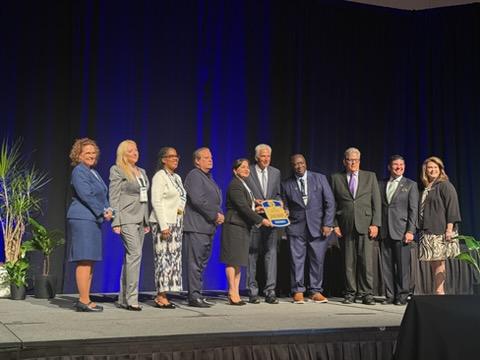
Essex County, NJ – Essex County Executive Joseph N. DiVincenzo, Jr. joined with CFG Health and Silver Lake Hospital in Newark to announce that the Essex County Correctional Facility-Silver Lake Hospital Mental Health Treatment and Diversion Pathway received the 2026 Program of the Year award from the National Commission on Correctional Health Care (NCCHC). The NCCHC honors one accredited correctional facility program nationwide that demonstrates outstanding patient safety, clinical innovation, and measurable data-driven improvements in care delivery. The award was presented October 28, 2026, during the NCCHC Annual Convention in Las Vegas.
The Essex County Correctional Facility-Silver Lake Hospital Mental Health Treatment and Diversion Pathway was created through a collaboration between Essex County Executive DiVincenzo and the Essex County Correctional Facility leadership, CFG Health, Silver Lake Hospital, the Essex County Civilian Task Force and the NJ Departments of Corrections and Health. The program welcomed its first patient from the Essex County Correctional Facility in August 2024 and has since grown into a regional provider of mental health diversion services providing treatment to over 400 patients from 10 counties in New Jersey.
“The leadership of our jail began to recognize that more and more inmates at our Correctional Facility were experiencing mental issues, and our facility was becoming more like a psychiatric clinic than a jail. Our main function is to provide a safe and secure environment for our staff and inmates, but we also want to help reduce recidivism, stop the cycle of imprisonment and help inmates address their problems that contribute to their criminal activity,” DiVincenzo said. “The program is the result of everyone coming together for a common goal. This award is evidence of the great things that are happening at the ECCF,” he added.
“At CFG Health, we believe correctional healthcare can be a powerful bridge to recovery and a healthier future,” said Brandon De Julius, CEO of CFG Health. “This program demonstrates what is possible when government, healthcare providers, the courts and community partners work together to address serious mental illness with the right level of care, at the right time, and in the right setting. By connecting individuals to appropriate treatment and support services, programs like this can reduce recidivism, improve public safety, and create healthier, more resilient communities. We are incredibly proud of our clinical team and our partners at Essex County and Silver Lake Hospital, and we are honored that NCCHC has recognized this innovative model of care with its 2026 Program of the Year award.”
A team consisting of Essex County correctional medical and mental health teams, Silver Lake Hospital clinicians, the presiding judge, the prosecutor, the patient’s public defender, and treating healthcare professionals must reach a consensus that the inmate is eligible to enter the program and can be released to Silver Lake Hospital.
As an example of how effective the program has been, officials from Essex County and CFG pointed to one case of an Essex County inmate whose life was changed after completing treatment at Silver Lake.
The inmate was arrested and detained on a low-level offense that the committee concluded was influenced by his untreated mental illness. At Silver Lake, the inmate entered a structured therapeutic environment specifically designed for individuals living with serious mental illness and co-occurring disorders. Instead of residing in a correctional housing unit, he was cared for in bright, recovery-oriented surroundings where psychiatric stabilization became the primary objective.
Treatment included comprehensive psychiatric evaluation, individual and group psychotherapy, medication education, family engagement, structured daily programming, and careful administration of both short-acting and long-acting antipsychotic medications. Long-acting injectable medications helped provide sustained symptom control while reducing the risk of a relapse after discharge. The inmate participated in predictable daily routines, developed coping skills, strengthened relationships with family members, and engaged with behavioral health professionals in an environment centered on dignity, recovery, and hope rather than custody and punishment.
After just four weeks, the patient’s transformation was remarkable. The young man who initially arrived disorganized, psychotic, socially withdrawn and unable to function independently gradually regained insight into his illness. He willingly participated in therapy, accepted medication, and began discussing plans for his future. After being discharged, he returned home to reunite with his family and resumed planning for the next chapter of his life. Among his first accomplishments was registering to continue work toward his graduate degree, demonstrating the profound difference that timely psychiatric intervention can make. Today, he remains engaged in monthly outpatient psychiatric follow-up, continues supportive psychotherapy, adheres to his prescribed treatment plan, and remains committed to his ongoing recovery.
Essex County, CFG Health and Silver Lake Hospital are proud of this compelling example of how correctional health care is evolving into being a catalyst for lasting recovery.
# # #