

20 May ESSEX COUNTY EXECUTIVE DIVINCENZO AND CITIZENS TASK FORCE ANNOUNCE MENTAL HEALTH TREATMENT PROGRAM FOR ELIGIBLE INMATES AT SILVER LAKE HOSPITAL
Published on May 20, 2026
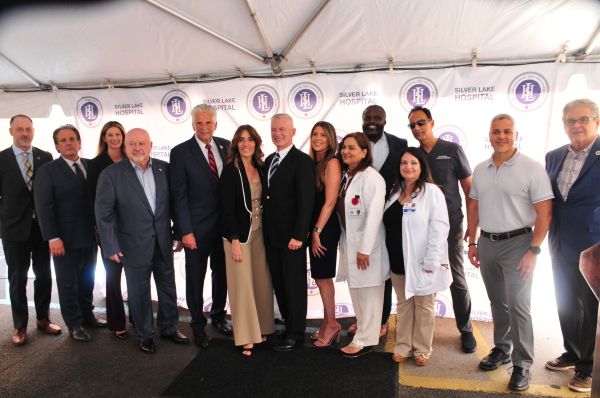
Newark, NJ – Essex County Executive Joseph N. DiVincenzo, Jr. and the Citizens Task Force at the Essex County Correctional Facility announced the creation of a groundbreaking program to treat Essex County Correctional Facility inmates experiencing serious mental illness at Silver Lake Hospital in Newark. The program is the result of the DiVincenzo administration working with the Task Force to focus attention on the need for a coordinated, clinically appropriate response for individuals with serious mental illness who are incarcerated at ECCF. It represents a coordinated partnership between the Essex County Correctional Facility, the Essex County Civilian Task Force, Superior Court, Prosecutor’s Office, Public Defenders’ Office and Silver Lake Hospital.
“We are proud to work with the Citizens Task Force to continually evaluate the services and care we provide to our inmates at the Essex County Correctional Facility,” DiVincenzo said. “This partnership with Silver Lake Hospital will enable our inmate with mental health issues to get the treatment they need in a more supportive and nurturing environment,” he added.
“I wanted to be here to support this revolutionary and groundbreaking program. We all know people in our jails have multiple needs, and this program is helping to address their mental health, drug addiction and housing problems,” said NJ Department of Corrections Commissioner Victoria Kuhn.
“If we really want to make a difference, we have to find out what the problem is and why it is happening. Then that person can be helped and reinstated into society and contribute to the community. This is an investment in human capital,” Senate Majority Leader and Deputy Chief of Staff Teresa Ruiz said.
“Correctional facilities across the country have become the default response to individuals struggling with mental health challenges. We are taking a different approach – one that is rooted in compassion, collaboration and evidence-based care. Rather than allowing individuals to simply cycle through the criminal justice system, we are creating a pathway toward stabilization and recovery,” Essex County Correctional Facility Director Ron Charles said.
“This program demonstrates our commitment to understand the causes of crime and to do what makes the most sense to put an end to it. This program provides the sustaining help inmates need to move toward recovery,” Prosecutor Ted Stephens said.
“We can’t keep recycling people through the criminal justice system and think we will get different results. Our staff at Silver Lake is here to diagnose and provide proper treatment to address the mental health needs of the inmates,” said Dr. Farkhanda Farooqi, DNP Administrative Director of the Dual Diagnosis Program at Silver Lake Hospital.
Official assessments of the population at the ECCF identify a substantial population of individuals with mental health needs requiring specialized care and housing. The high number of inmates with mental illness is not unique to Essex County. Nationally, the Substance Abuse and Mental Health Services Administration (SAMHSA), based in Maryland, estimates that 44 percent of people in jail have a mental illness, underscoring the urgent need for correctional systems to coordinate directly with clinical providers.
Essex County’s partnership with Silver Lake Hospital, a long-term acute care hospital, establishes a structured pathway for evaluation, transfer, psychiatric treatment, medication management, and continuity of care. This level of specialized attention would not be possible if the inmate remained in the Essex County jail. Eligible inmates at ECCF are screened for safety and clinical appropriateness and, where approved, released to Silver Lake Hospital for treatment in a medical setting rather than remaining in jail. Essex County has had about 120 inmates successfully complete the program and there are 22 Essex County inmates currently in the program at Silver Lake Hospital, which also has 40 other individuals from other jail facilities in its specialized unit. The hospital also has an application pending with the NJ Department of Health to expand the unit by another 38 beds.
The mental health initiative complements other Institutional Enrollment Services at ECCF, established through a partnership Essex County has with the NJ Reentry Corporation (NJRC). NJRC works with eligible inmates before they are released, supporting pre-release planning for identification documentation, access to benefits, treatment continuity, housing pathways, legal barrier resolution, and workforce readiness.
“Trauma changes the brain,” stated Jim McGreevey, Executive Director, NJ Reentry Corporation. “For individuals with serious mental illness, incarceration can intensify fear, isolation, and clinical instability. Senate Majority Leader Teresa Ruiz championed a mental health diversion initiative that provides a more appropriate clinical pathway to psychiatric treatment, stabilization, medication management, and continuity of care. We are grateful to Senator Ruiz, Essex County Executive DiVincenzo, Chief of Staff Phil Alagia, and Silver Lake Hospital for strengthening clinical mental health services for eligible individuals in need of treatment and support,” he added.
NJRC has enrolled 31,651 participants, obtained 6,689 birth certificates, secured 6,034 MVC identification cards and driver’s licenses, completed 24,339 Medicaid enrollments, referred 13,012 individuals to addiction treatment, and connected 9,310 participants to psychiatric treatment facilities and behavioral or mental health services.
Together, ECCF, Silver Lake Hospital and NJRC are creating a coordinated response to trauma at the point where incarceration, mental illness, and reentry intersect. Silver Lake provides the appropriate clinical setting for psychiatric treatment and stabilization; ECCF identifies eligible individuals and coordinates safe transfer; and NJRC supports continuity throughout reentry. This partnership recognizes that addressing trauma requires more than release from custody; it requires treatment, structure, and sustained support as individuals return to the community.
# # #